How teens can gain an understanding of dementia through craft
It is by no means a misconception that dementia is perceived differently by people of different ages, ethnicities, genders and various other factors. I have often wondered how young adults perceive dementia and how it impacts families. What do they think and feel when they (for example) see their parents/grandparents behaving in an odd manner? Do they think they are mad? Would they share their opinions and feelings with others or keep their thoughts to themselves? I would expect that it would depend on their experience of the condition. In many families especially in the some of the marginalised communities several generations may live together or in close proximity to them, so exposure to an ailing relative, would be more likely, than not. It was only recently that I had an opportunity to gain an understanding of what adolescents think and feel about dementia.

The Youth Involvement and Engagement Lab Project
A chance introduction to Fola Afolabi, the Project Leader of a truly wonderful initiative resulted in an invitation to lead a workshop during the summer. The Lewisham Youth Brain Health Project was funded by the Alzheimer’s Research UK Inspire Fund and led by the Youth Involvement and Engagement Lab, with support from other organisations, including Dementia Sphere, Lewisham Young Mayor and Young Advisors, King’s College London, Alzheimer’s Research UK, Dementia Sphere, Lewisham Dementia Support Service (Alzheimer’s Society), LGC, the National Institute for Health and Care Research, Radio Lewisham and the SPIN Dementia Network Plus. The project is a continuation of their previously successful programme on brain health and dementia awareness. This current project was aimed at establishing a work experience program for young people aged between 13 and 18. This experience would enable them to lead engagement in their schools and communities. Their remit was to create innovative and accessible resources on dementia prevention. Additionally, they would create a publication that would share best practices on working with young people in the dementia prevention field. Their work was primarily focused on marginalised communities, using lived experience of dementia and involving people across generations.
Involvement of Dementia Sphere
Dementia Sphere was involved from two perspectives; as a person with lived experience and my crochet project. My brief was to talk to them about my lived experience as a carer for my mother, introduce them to my ‘Millions Squares for Dementia’ project and teach them how to crochet with a view to them making some squares for the project.
My initial thoughts when I met the group was of surprise. I had expected the group to be primarily female, but I was struck by the number of young boys in attendance. To say that I was apprehensive is putting it mildly. I was excited and honoured to have been invited to run this workshop, but I had no previous experience of dealing with teenagers. I wondered if they would be interested in what I had to say or would they be sitting on their mobile phones or chatting amongst themselves. I could not have been so wrong!! They were listening, asked interesting questions and seemed to be genuinely engaged. One participant asked me a question that still plays on my mind to this day.
‘Did I think of my mother differently once I had found out about her diagnosis?’
What an interesting question I thought to myself. It’s not something that I had thought about previously and he had put me on the spot. On reflection I answered that my initial perceptions of her did not change. It was only after her behavioural issues emerged, towards the latter part of her journey, that they changed, not my feelings but how I dealt with her and thought of her. My feelings of her as a daughter were still there and the love remained but I needed to change my mindset; thinking more of what was best for her in terms of her needs, rather than catering to other people’s requirements and desires, or mine for that matter.
When speaking to the young people at the workshop, I endeavoured to explain the realities of looking after someone with dementia and not sugar coat it due to their age. I explained the importance of financial and medical planning and what the consequences were of not completing a lasting power of attorney and a will. I also mentioned the importance of social interaction and more culturally appropriate services for those living with dementia.
Crochet Workshop
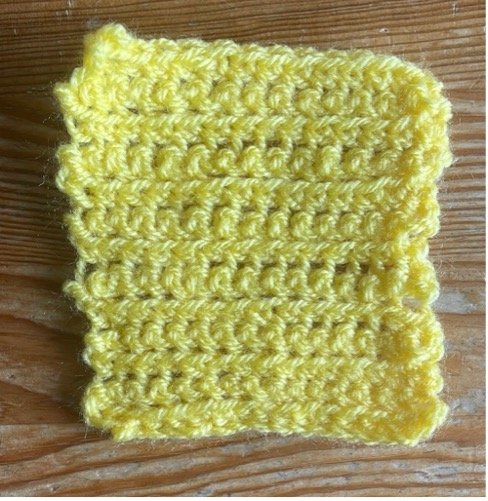
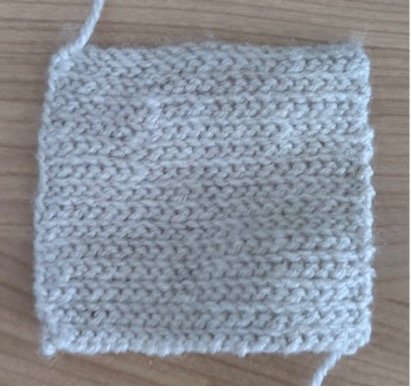
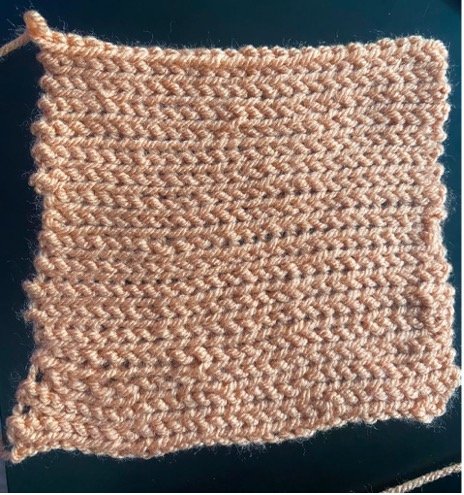
Following my talk, we commenced the ‘learning to crochet’ segment of the workshop. This was more challenging as none of the participants had ever crocheted or knitted before and therefore, had never even held a crochet hook in their hand. I must say I was impressed by their commitment to learning a new skill. One participant insisted that he would continue to crochet even during the lunch break until he mastered the skill. I was beyond impressed. Whilst the goal had been for them to complete a square in that afternoon, I was happy for them to practice at home before submitting their images. The following week I met with the group again and was surprised to see that a few of them had completed squares. Images of the squares are posted below.
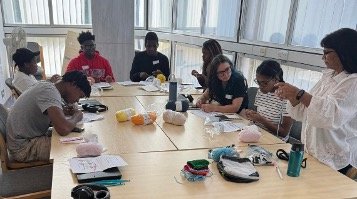
There is very limited research on using craft as a means for education and awareness of dementia amongst young people. Traditionally the focus has been on how craft benefits those living with dementia. I am of the belief that undertaking a form of craft is a fun way to introduce the challenges and nuances of dementia. I hope that schools, youth groups and after-school clubs will start or at least continue to use craft in the aid of dementia awareness and knowledge at an earlier age.
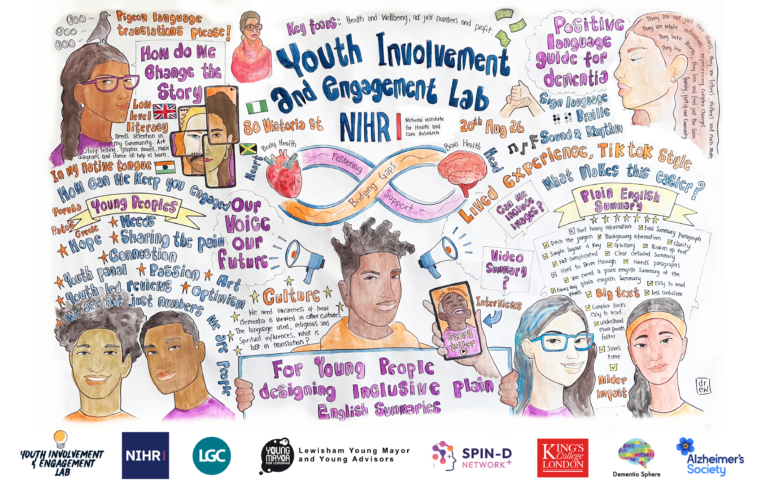
Following the workshop, the youth produced a video (click here to view) and graphical representation below of their experience of learning about dementia.